Changing property managers while a tenant is living in the home can feel risky. The resident is paying rent, may have a repair pending, and has probably never heard of the new company. A poorly handled transfer can lead to missed rent, confusion about the security deposit and repairs that fall through the cracks. A well-organized handoff does the opposite: it keeps the lease running as written and gives the resident little reason to notice anything except a new payment method and contact. For owners in Volusia and Seminole counties, careful preparation is one of the most useful things you can do for both the rental and the resident.
This guide walks through the sequence: review the management agreement, collect the records, coordinate instructions the tenant can verify, and check the first month after the transfer.

Read the agreement before setting a date
The management agreement controls how and when the relationship can end, so read it before you contact anyone. Look for these provisions:
- Notice method: written notice, certified mail, email or another form the contract names
- Notice period: the number of days required before termination takes effect
- Termination fees: flat fees, remaining-term charges or fees tied to a tenant already placed
- Restrictions on active properties: language that applies when a tenant is in place or a work order is unresolved
- Renewal and leasing fees: whether the outgoing manager is owed anything on the current lease or an upcoming renewal
Gather the signed agreement and every amendment. Then ask the outgoing and incoming managers to confirm their responsibilities and an agreed cutoff date in writing. A written cutoff matters because the days around a transfer are where gaps appear. If the old manager stops acting on the 15th and the new manager starts on the 1st, a repair request or a late rent notice can land in between.
Timing also deserves thought. Rent due dates, scheduled inspections and a lease renewal date all affect when a handoff is least disruptive. Many owners choose a cutoff at the end of a rent cycle so a single month's payments are handled by one company.
Ask for records that tell the whole story
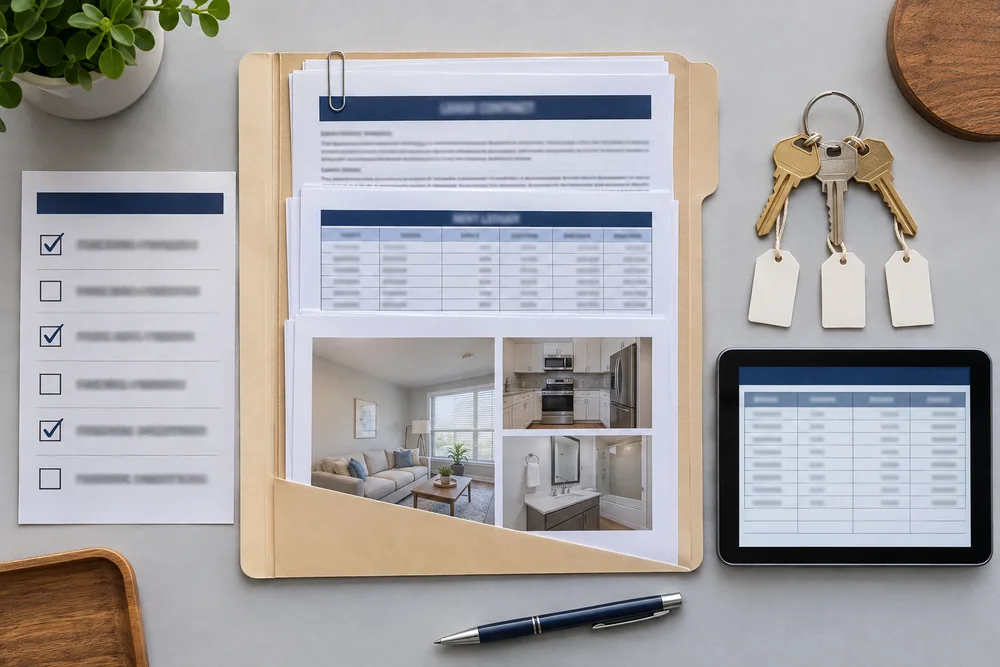
The incoming manager can only run the lease as well as the file allows. Ask the outgoing manager for the complete record, not just a summary. A thorough transfer file usually includes:
- The signed lease and all addenda, such as pet, pool or lawn terms
- The rent ledger and the current balance
- Security deposit and advance rent records
- Move-in inspection photos and any condition reports
- Open maintenance requests and recent repair history
- Vendor contacts and any warranties on appliances, roofs or systems
- Keys, lockbox codes and access instructions
A ledger total is only a starting point. It will show what was collected, but not where the money is. Ask who is physically holding tenant funds, how those funds will move to the new manager or to the owner, and how the parties will document the transfer. Florida law addresses how security deposits and advance rent are held and what notice a tenant receives, so review Florida Statutes § 83.49 and confirm the process with your manager and counsel.
Open maintenance requests deserve extra attention. A leaking fixture that the old manager approved but never scheduled can become the new manager's first complaint. List each open item, who approved it, the vendor involved and what remains to be done.
Coordinate instructions the tenant can verify
From the resident's point of view, the change is simple: someone new is now collecting rent and handling repairs. Their main concern is that the message is real. Payment-redirection scams are a known risk, so the instructions need to be something the tenant can confirm.
Give the resident the following:
- A clear effective date for the change
- A verified way to pay, including how to reach the new portal or payment address
- A maintenance contact and the way to submit a request
- Instructions for an urgent issue, such as a water leak, no air conditioning in summer or a security concern
Send the notice in writing, and ideally have both managers sign off on the same message. Encourage the tenant to call the number on the notice or the owner if anything looks unfamiliar. Plan the timing around the rent due date, and keep a record of when and how the notice was delivered.
The signed lease continues to govern the tenant's obligations. A change in management does not rewrite its terms. If the new manager proposes changes to rent, fees, rules or lease language, review them with your manager and counsel as needed before they reach the resident. Tenants tend to respond well to a handoff that changes only the contact details and leaves everything else as it was.
Check the first month after the transfer
The first month shows whether the handoff worked. Confirm these points:
- The resident can log in to the new portal and has received payment instructions
- Rent lands in the correct ledger and the balance matches the transfer records
- Any urgent repair has an assigned owner and a scheduled date
- Deposit and advance rent records agree between the old file and the new one
- The owner receives statements in the format and on the schedule they expect
Ask the new manager for a short written summary after the first rent cycle. It should show what was collected, what remains open and what comes next. If something does not match, raise it while the details are fresh and both managers can still check their files.
It is also a good time to look ahead. A rental evaluation can use the existing contract rent and the renewal date to help you plan what comes next, whether that is renewing at the current rent, adjusting it or preparing for a turnover. Pricing decisions are easier when the records are clean and the resident is settled.
Putting it together
Switching managers with a tenant in place comes down to four habits: read the agreement and set a written cutoff, collect the complete record, give the resident instructions they can verify, and review the first month. None of these steps is complicated, but skipping any of them can leave the resident without a clear point of contact or leave the owner without a clear record of who holds what.
Every agreement and property is different, so confirm the details with your manager and counsel before acting. If you are considering a change for a home in Volusia or Seminole County, gather the agreement and recent ledger first. They will tell you most of what you need to plan the transfer.
Ready to make the change? See how MainStreet can take over your occupied rental.
Official resources
- Florida Statutes § 83.49 (deposit money and advance rent)
This article is general information, not legal advice.
Request a free rental evaluation