A seller's rental projection is a starting point, not a verdict. Listings and brochures often show the highest plausible rent, little or no vacancy and a short list of expenses. The numbers can look attractive until you add insurance, association dues, repairs and the months a home sits empty. Checking real cash flow before you buy helps you see what a property may produce after the costs that are easy to overlook.
A credible rental pro forma starts with a realistic long-term rent range and the property's actual costs. Run a base case and a downside case before relying on the seller's projections. The sections below explain how to build each piece.
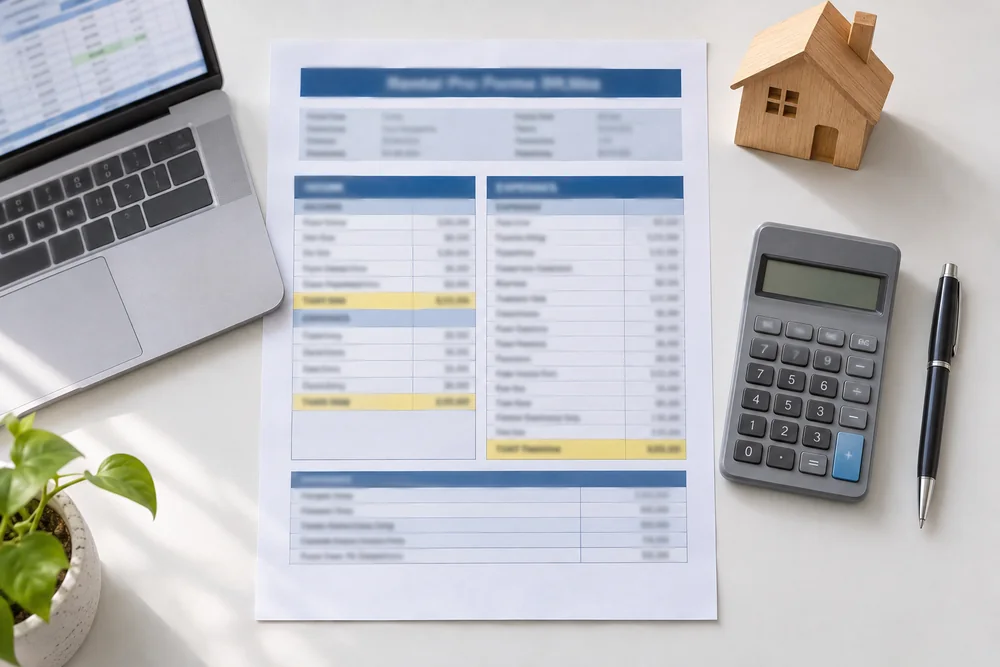
Calculate what you can realistically collect
Start with base rent, and anchor it to recent comparable leases. Signed leases are more reliable than asking prices, because they show what tenants actually agreed to pay. Match the property type, bedroom and bath count, condition, parking and location as closely as you can.
Then account for the income you will not collect. Two adjustments matter most:
- Vacancy: the time between tenants, including repairs, cleaning, marketing and showings
- Collection risk: late payments, partial payments and unpaid rent that is never recovered
Keep lease length and included services consistent across your comparisons. A furnished seasonal listing near the coast may tell you little about an unfurnished annual lease for the property you intend to buy. Seasonal rentals follow different pricing, occupancy and management patterns, and mixing them with annual leases can inflate the rent assumption. If a seller's projection relies on short-term or seasonal rates, ask what the property would earn under a standard annual lease.
Also check what the rent includes. If a comparison home's rent covers lawn service, pool care or other services, and your property's will not, the figures are not equivalent. Adjust for the difference and write the adjustment down.
Model ordinary operations and large replacements
Many first-time models understate costs because they use estimates in place of quotes and records. Replace estimates with actual figures wherever possible:
- Insurance: get quotes for the specific address, since age, roof, construction and flood exposure can change the price significantly
- HOA or condo dues: request the current amount and any pending or recent special assessments
- Owner-paid utilities: water, sewer, trash or other services you may pay while the home is vacant or under the lease terms
- Lawn and pool costs: the actual service fees, if you will provide them
- Management terms: monthly fees, leasing fees, renewal fees and maintenance markups
- Taxes: property tax based on the purchase price, not the seller's current assessment
Include turnover and leasing costs in your annual cash plan. Cleaning, small repairs, paint, advertising and leasing fees recur whenever a tenant moves out, so they belong in the budget even in a year when you hope to keep the same resident.
Finally, separate your numbers into groups. Track capital reserves and mortgage payments separately from routine operating expenses. Operating expenses show how the property performs on its own. Reserves for a roof, air conditioner or water heater show what you should set aside for large replacements. The mortgage shows what remains after financing. Keeping these separate helps you understand what is left after financing and planned replacements, instead of seeing one blended figure that hides the risks.
Test the effect of one bad year
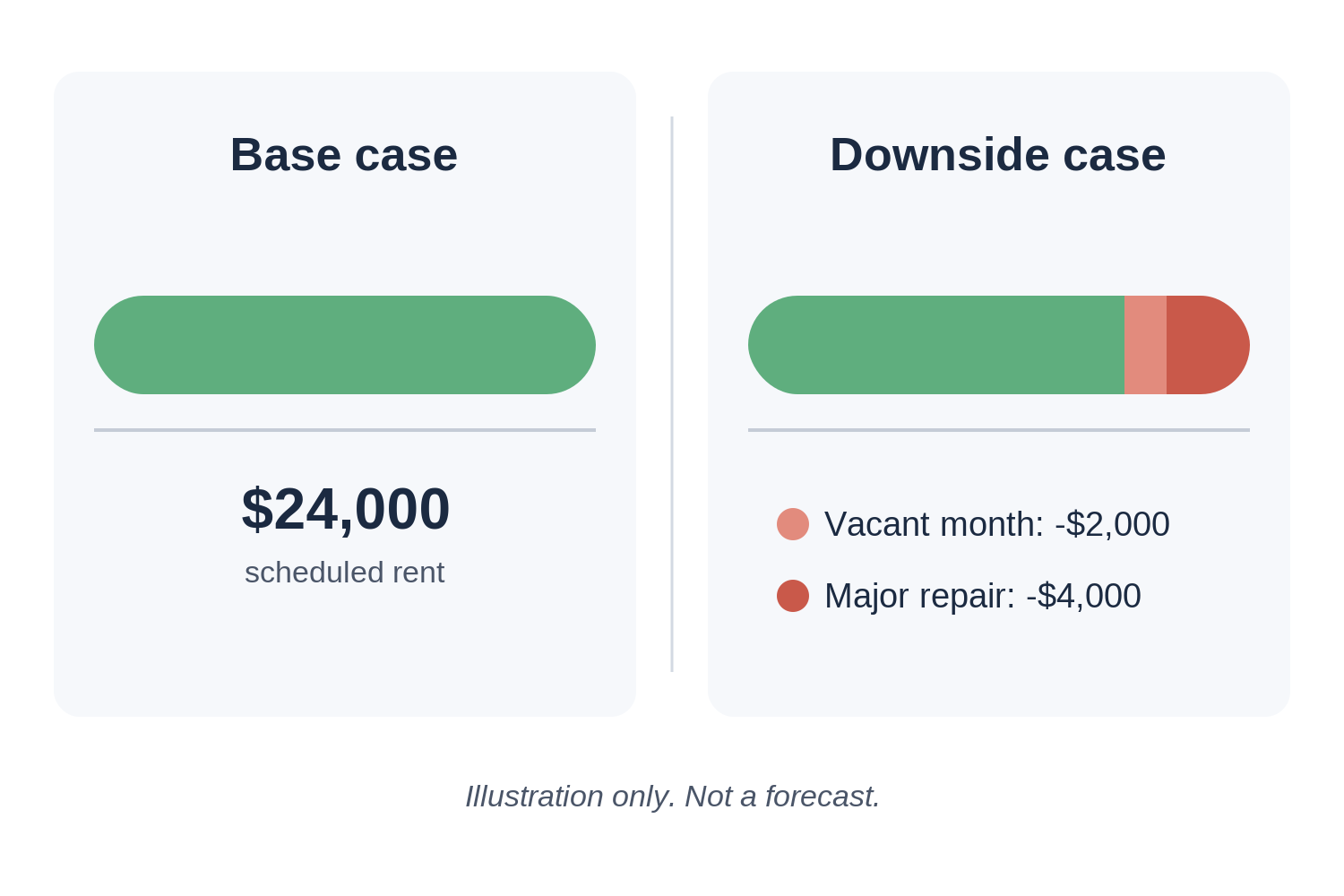
A base case assumes things go reasonably well. A downside case asks what happens when they do not. The simplest stress test uses one vacancy and one large repair in the same year.
Here is an illustration using round numbers. At $2,000 projected monthly rent, scheduled gross rent for a year is $24,000. A vacant month reduces that by $2,000 before other effects, leaving $22,000. If you also need a $4,000 major repair in that year, those two changes reduce cash available by $6,000 before any offset. That is a quarter of the year's scheduled rent.
This is a stress test using illustrative amounts, not a forecast. Its purpose is to show whether the investment can absorb a bad year. If a single vacancy and one repair would leave you unable to cover the mortgage, taxes and insurance, the reserves or the margin may be too thin. If the numbers still work, you can enter the purchase with more confidence.
Check the property before relying on the model
A model is only as good as its inputs, and those inputs come from the property itself. Use the parcel records, flood source, association documents and inspection report for that address. Each answers a different question:
- Parcel records: ownership, lot details, assessed value and tax history
- Flood source: the flood zone and risk information from the county's published resources, which may affect insurance cost and requirements
- Association documents: dues, rules on rentals, minimum lease terms and any restrictions on tenants
- Inspection report: the age and condition of the roof, air conditioner, plumbing, electrical system and water heater
Compare separate insurance quotes before committing, since coverage and price can vary considerably between providers and between addresses. For homes in Volusia County, the county's flood zone and risk information, listed below, is a useful place to start.
If you are evaluating multiple purchases, ask MainStreet to confirm coverage for the portfolio and discuss the full management proposal. Management terms, including fees and the services included, should be reviewed in writing before you finalize your numbers.
Putting it together
Checking real cash flow comes down to four habits: base rent on recent comparable leases and subtract vacancy and collection risk, replace estimates with actual quotes and records, test a downside year, and verify the property's records before relying on the model. A pro forma built this way will often look less generous than a seller's projection, which is the point. It shows what the property may produce and how much margin you have if something goes wrong.
Every property and purchase is different, so confirm the details with your lender, insurance agent, accountant and attorney as appropriate. If you are considering a purchase in Volusia, Seminole or the surrounding counties, gather the property records and recent comparable leases first. They will tell you most of what you need to build a base case.
Official resources
Figures in this article are illustrations and do not guarantee any financial outcome. This article is general information, not financial, tax or legal advice.
Request a free rental evaluation